Winston-Salem's Best Bat Removal
We've been voted Winston-Salem's best bat removal company the past two years!
Get in touch
Bat Experts
Rapid Response
Trained & Educated
Licensed & Certified
About Winston-Salem Bat Removal
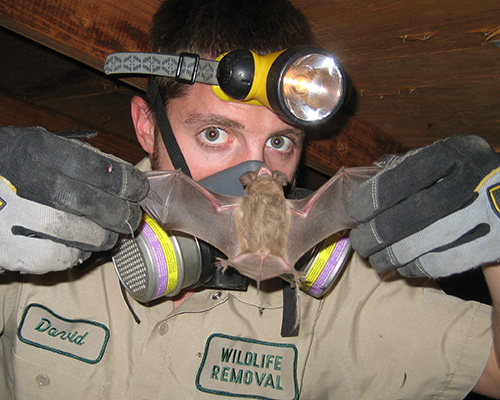
Welcome to winstonsalembat.com. We are the only qualified bat removal company in Winston-Salem, North Carolina. We're a licensed wildlife control company with expertise in removing bats legally and in a 100% effective manner. Whether these pests are hiding in your attic, have made their home in the walls of your home, have infested the basement and garage, or are just swarming in your property, bats are a nuisance. Apart from the fact that these animals are quite spooky, they also cause damage to your property with the bat guano and their droppings that leave ugly stains everywhere. But when it comes to getting rid of bats, the task isn't that easy and must be done by an expert only. That's because killing or poisoning any species of bats is illegal. We provide professional bat removal services for homes, offices, apartment buildings, and any type of residential or commercial property that's infested with bats. Our bat removal experts have years of experience in clearing properties infested with bats without harming the animals in any way at all. Plus, we do not trap the bats as well. If any wildlife animal is captured during the process, our team of experts ensures that the creature is safely transported to its natural habitat where it may spend the rest of its life in peace. In addition to this, after removing the entire bat colony from your property, we'd also decontaminate the space and clean all the surfaces filled with bat guano. After our experts have finished the job, you'd be left with a home that isn't just free of bats, but also clean, fresh, and without any lingering smell of bats! We operate 24-7-365, so don't hesitate to call us at 336-690-5475 to discuss your bat problem and schedule a fast appointment.
Residential
We are experts at removing bats from residential properties. Whether you have a single bat trapped in your house, a colony roosting in your attic, and/or various other problems, there is no need to worry! During our removal process, we make sure to inspect your entire home carefully, tracking down all the entrypoints bats are using to invade your place. Next, we perform a process called live exclusion (where no bats are harmed and all exit your property), then seal all entry holes completely shut. We also take care of the cleanup process after, so your home is safe and clean!
Learn MoreCommercial
Besides residential areas, we also have a wealth of experience removing bats from commercial properties! We begin by investigating the area for possible bat entrances, covering holes even as small as 1/4 of an inch. Through our live exclusion process, bats leave the building through one-way exits, and we seal up every hole afterward. Once the bats have been removed, we perform a cleanup process. This includes dealing with guano, replacing damaged insulation, and decontaminating the place.
Learn More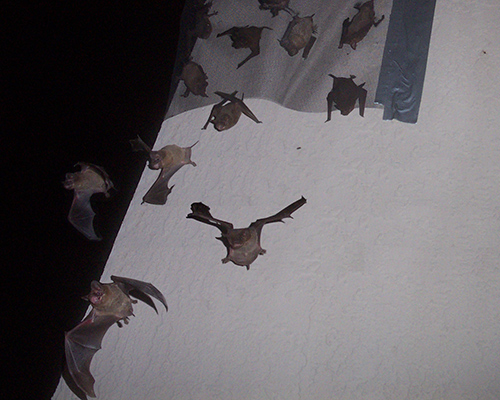
Contact us for bat removal today!
What Our Customers Say
I had a bat flying around in my house at 9pm, and CITY bat removal came right out and caught it in a net.
Sarah Lakewood
I had an annoying colony of bats stuck in my attic for a while before I finally decided to call for help. They were able to quickly and thoroughly solve the problem!
Brandon Chung
They did a great job clearing my attic of bats and didn't hurt any of the creatures.
Charlotte Demers
The technicians at CITY Bat Removal are skilled, professional, and know exactly what they're doing. Would highly recommend.
Mark O'Connor
My house stank of bats and their guano inside my wall. CITY Bat Removal not only removed the bats, they also got rid of the smell!
Alexis Ramirez
.jpg)
The Little Brown Bat
One of the most common bats seen in North America is the little Brown Bat, also known as Little Brown Myotis or Myotis Lucifugus. One of the most well studied bats; it has lead to many advances when it comes to removing them from a home or property. Despite this advances, people still continue to try and remove these cute little creatures from their homes using incorrect methods.
As the name of the bat would suggest, it is a small brown bat. It usually has a wingspan of around 25cm, and is easily hidden amongst the rafters and within attics of homes in the Northern parts of the United States, as well as most of Canada. These animals have been found in other places of the world, such as Iceland, but this has been believed to be because of human error and transportation, rather than migration.
Although nocturnal in nature, the brown bat has three different roosts – the daytime roost, the nighttime roost, and the hibernation one also. This can make it easier when trying to figure out what part of the lifespan the bat is within when it lays its head to rest in your home, and is also good knowledge to have when you are trying to look at removal methods that do not include a professional wildlife control expert.
As a general rule, the bat will choose to live in trees or buildings as their day roosts – this means that you are more than likely going to find them in the attic of your home, in the trees that you have in your yard, and even in other places such as the shed or garage. If you find a bat in your home, there is a good chance that you have found the day roost of the bat. You may also find that they love to live under rocks during this period also, and even in wood piles, making your property a perfect daytime dwelling for the Little Brown Bat. The attics of buildings have been proven for many years to be a perfect site for a nursery for the animals, so should you find a bat, (you are likely to find more than one) in the uppermost areas of your home, you will need to have a good look around for any babies that are probably going to be present.
The Little Brown Bat will live in the same places during the nighttime roosting period, but different sections of these places will be used. For example, you will find that the bats will dwell in one part of your attic during the day, and another part of the attic during the night. The latter is usually going to fall somewhere near their entrance or exit, to make feeding an easier process. Also, the bats are more active at night, so they will need to keep the two areas separate to keep their feces away from where they would sleep during the daylight hours.
When it comes to the diet of the Little Brown Bat, they are insectivores, choosing to munch down on anything small that flies their way. This could mean anything from the humble moth that you find in your home to bees, wasps, mosquitoes, gnats and even beetles. When you think of it this way, these creatures are actually good for your home by keeping these annoying insects away. If you live anywhere near water, you will find that you have a higher risk of having these creatures near or in your home, as the insects they love to eat are those that usually habit around water, such as mosquitoes.
The mating phases of bats are especially important to learn if you are looking to remove these creatures from your home or land. There are two phases for the Little Brown Bat – the active phase and the passive state. The former, (active) is when both partners are alert, and the latter, (passive) is when the males will quite literally mate with anything, regardless of whether they are male or female. Mating season is usually at its peak around August, but can go anywhere between late summer to early winter. In spring, once the hibernation is complete, the females will colonize in nurseries; the ones that you will more than likely find in your home in areas of high humidity, and this is where they will raise their young – usually May to July time. This is where they will stay for around four weeks, which is when the babies reach adulthood.